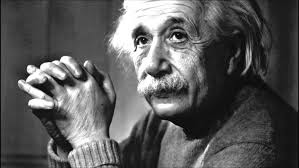
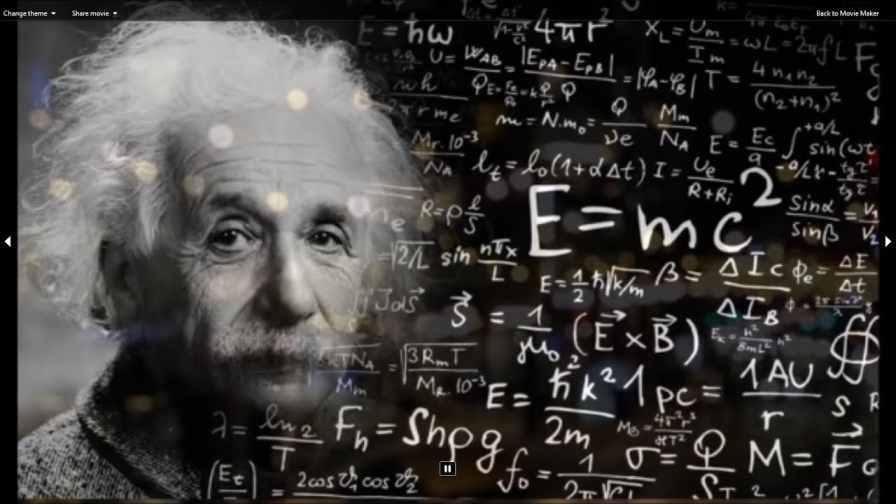
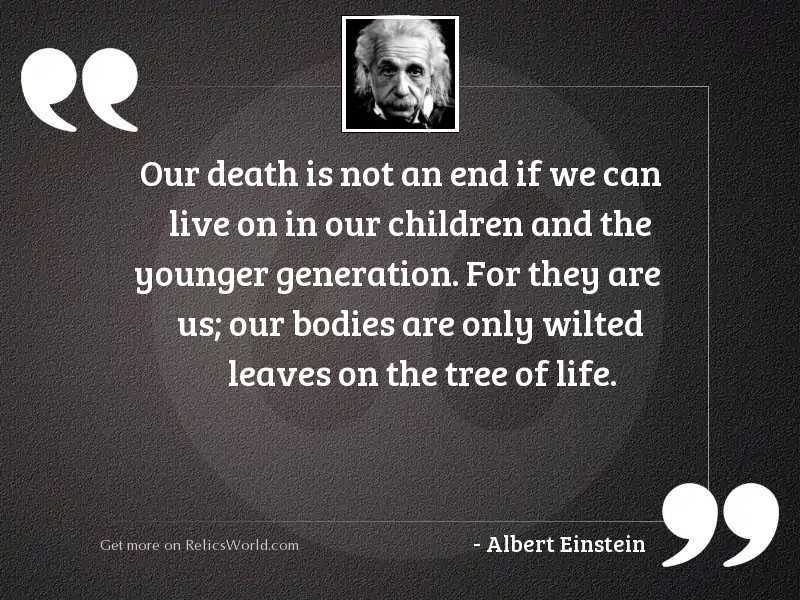
Albert Einstein (14 March 1879 – 18 April 1955) was a German-born theoretical physicist alongside quantum mechanics . His work is also known for its influence on the philosophy of science . He is best known to the general public for his mass energy equivalence formula , which has been dubbed “the world’s most famous equation ” . He received the 1921 Nobel Prize in Physics “for his services to theoretical physics and especially for his discovery of the law of the photoelectric effect ” , a pivotal step in the development of quantum theory .
Einstein moved to Switzerland in 1895 and and renounced his German citizenship in 1896 . After stateless for more than five years , he acquired Swiss citizenship in 1901, which he kept for the rest of his life . Except for one one year in Prague , he lived in Switzeland between 1895 and 1914.
He received his academic diploma from the Swiss federal polytechnic school in Zurich in 1900 . Between 1902 and 1909 he was employed in Bern as a patent examiner at the Federal Office for Intellectual Property , the patent office . In 1905, called his annus mirabilis (miracle year ) , he published four groundbreaking papers , which attracted the attention of the acadmic world . That year , at the age of 26, he was awarded a Ph.D. by the university of Zurich.
He taught theoretical physics for one year (1908/09) at the University of Bern , for two years (1909-11) at the University of Zurich, and after one year at the Charles University in Prague he returned to his alma mater ETH Zurich between 1912 and 1914 , before he left for Berlin , where he was elected to the Prussian Academy of Sciences .
In 1933, while Einstein was visiting the United States , Adolf Hitler came to power . Because of his Jewish background , Einstein did not return to Germany. he settled in the United States and became an American citizen in 1940 . On the eve ofcWorld War II , he endorsed a letter to President Franklin D. Roosevelt altering FDR to the potential development of “extremely powerful powerful bombs of a new type ” and recommending that the US begin similar research . The eventually led to the Manhattan Project . Einstein supported the Allies , but he generally denounced the idea of using nuclear fission aws a weapon . Ne signed the Russell-Einstein Manifesto with British philosopher Bertrand Russell , which highlighted the danger of nucler weapons . He was affilliated with the Institute for Advanced Study in Princeton , New Jersey , until his death in 1955.
He published more than 300 scientific papers and more than 150 non-scientific works. His intellectual achievements and originality have made the word “Einstein” synonymous with “genius” . Eugene Wigner compared him to his contemporaries, writing that “Einstein’s understanding was deeper even than Jncsi von Neumann’s. His mind was both more penetrating and more original”.
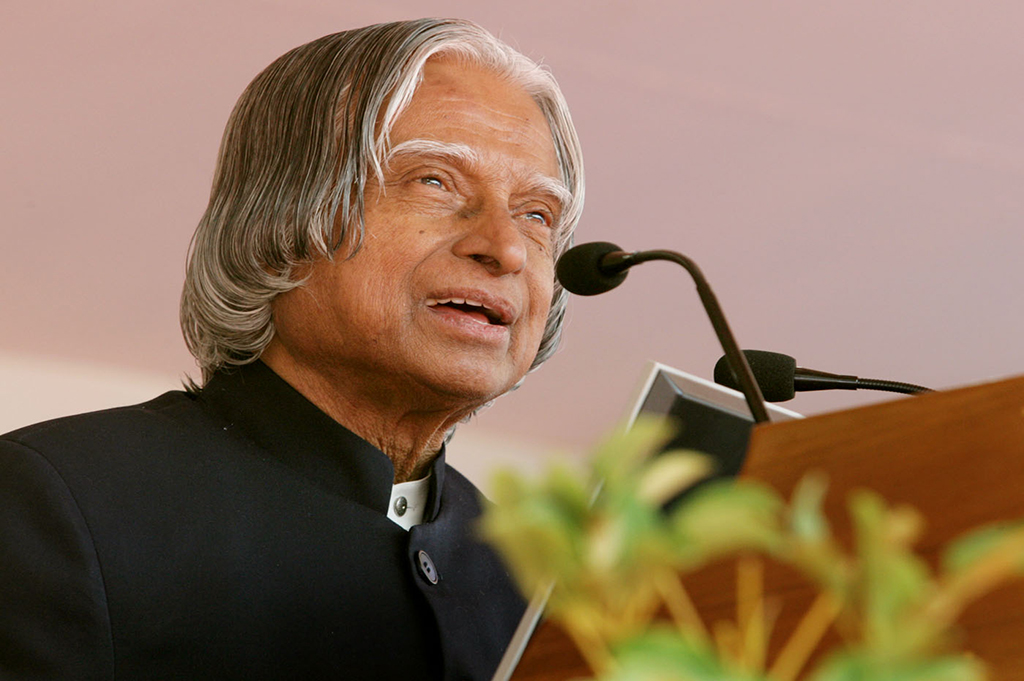
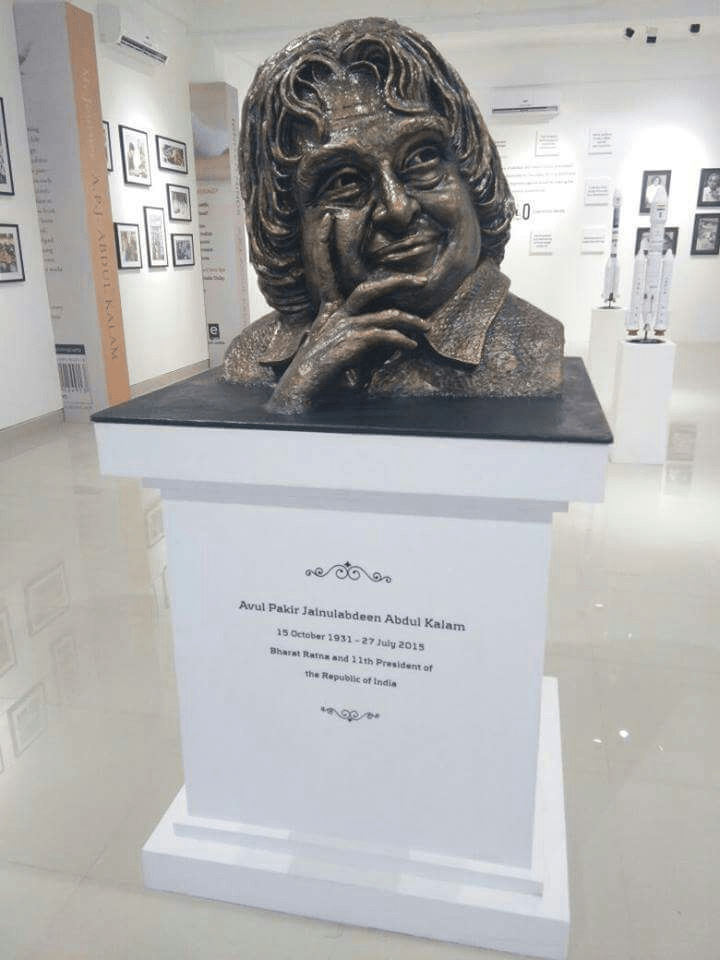
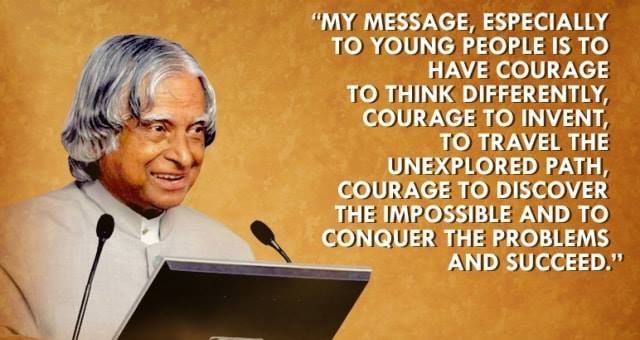
Avul Pakir Jainulabdeen Abdul Kalam served as the 11th President of India from 2002 to 2007. He was an Indian aerospace scientist and politician who was born and raised in Rameswaram, Tamil Nadu and studied physics and aerospace engineering. He spent the next four decades as a scientist and science administrator, mainly at the Defence Research and Development Organisation (DRDO) and Indian Space Research Organisation (ISRO) and was intimately involved in India’s civilian space programme and military missile development efforts. He thus came to be known as the Missile Man of India for his work on the development of ballistic missile and launch vehicle technology. He also played a pivotal organisational, technical, and political role in India’s Pokhran-II nuclear tests in 1998, the first since the original nuclear test by India in 1974.
Kalam was elected as the 11th President of India in 2002 with the support of both the ruling Bharatiya Janata Party and the then-opposition Indian National Congress. Widely referred to as the “People’s President”, he returned to his civilian life of education, writing and public service after a single term. He was a recipient of several prestigious awards, including the Bharat Ratna, India’s highest civilian honour.
While delivering a lecture at the Indian Institute of Management Shillong, Kalam collapsed and died from an apparent cardiac arrest on 27 July 2015, aged 83. Thousands, including national-level dignitaries, attended the funeral ceremony held in his hometown of Rameswaram, where he was buried with full state honours.
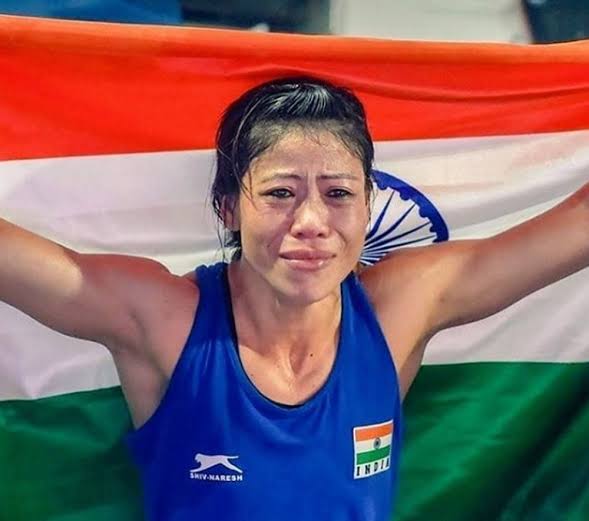
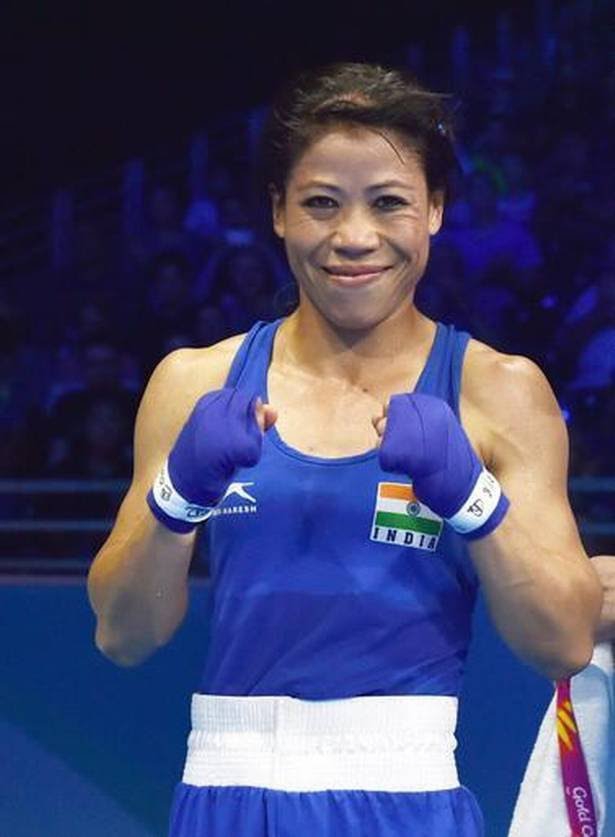
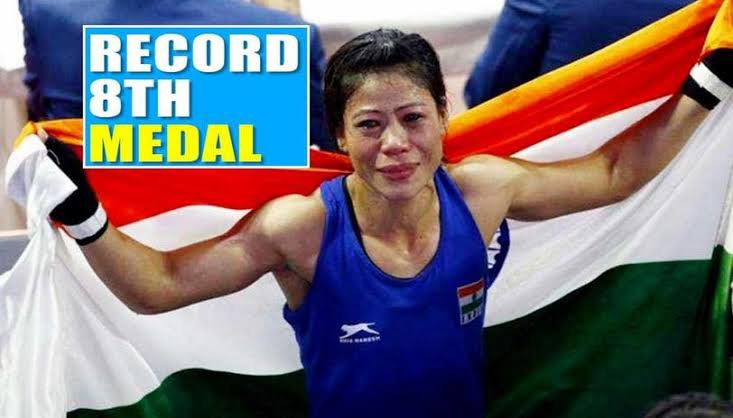
Mangte Chungneijang Mary Kom (born 1 March 1983[1]) is an Indian Olympic boxer and incumbent Member of Parliament, Rajya Sabha. She is the only woman to become World Amateur Boxing champion for a record six times, the only woman boxer to have won a medal in each one of the first seven World Championships, and the only boxer (male or female) to win eight World Championship medals.
Nicknamed Magnificent Mary, she is the only Indian woman boxer to have qualified for the 2012 Summer Olympics, competing in the flyweight (51 kg) category and winning the bronze medal.[9] She had also been ranked as No. 1 AIBA World Women’s Ranking Light Flyweight category. She became the first Indian woman boxer to get a Gold Medal in the Asian Games in 2014 at Incheon, South Korea and is the first Indian woman boxer to win gold at the 2018 Commonwealth Games. She is also the only boxer to become Asian Amateur Boxing Champion for record six times. On 25 April 2016, the President of India nominated Kom as a member of the Rajya Sabha, the upper house of the Indian parliament. In March 2017, the Ministry of Youth Affairs and Sports, Government of India, appointed Mary Kom along with Akhil Kumar as national observers for boxing.
After her sixth world title in 2018, the Government of Manipur has conferred on her the title “Meethoi Leima”, loosely translated as great or exceptional lady in a felicitation ceremony held in Imphal on 11 December 2018. At the function, the then Chief Minister of Manipur also declared that the stretch of road leading to the National Games village in Imphal West district, where Kom currently resides, would be named as MC Mary Kom Road. She was awarded the Padma Vibhushan, India’s second highest civilian award, in 2020.
National Achievements Gold – 1st Women Nat. Boxing Championship, Chennai 6–12.2.2001 The East Open Boxing Champ, Bengal 11–14 December 2001 2nd Sr World Women Boxing Championship, New Delhi 26–30 December 2001 National Women Sort Meet, N. Delhi 26–30 December 2001 32nd National Games, Hyderabad 2002 3rd Sr World Women Boxing Champ, Aizawl 4–8.3.2003 4th Sr WWBC, Kokrajar, Assam 24–28 February 2004 5th Sr WWBC, Kerala 26–30 December 2004 6th Sr WWBC, Jamshedpur 29 November-3.12.2005 10th WNBC, Jamshedpur lost QF by 1–4 on 5 October 2009. Much more on international level.
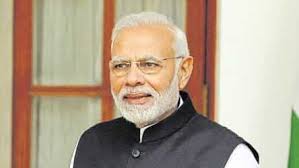
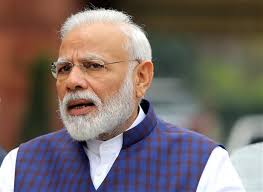
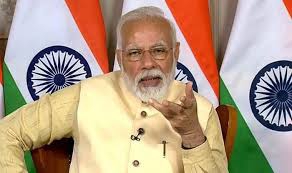
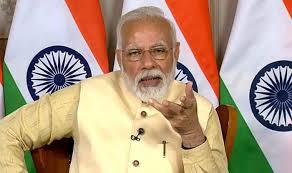
Narendra Damodardas Modi is an Indian politician serving as the 14th and current Prime Minister of India since 2014. He was the Chief Minister of Gujarat from 2001 to 2014 and is the Member of Parliament for Varanasi. Modi is a member of the Bharatiya Janata Party (BJP) and of the Rashtriya Swayamsevak Sangh (RSS), a Hindu nationalist volunteer organisation. He is the first prime minister outside of the Indian National Congress to win two consecutive terms with a full majority and the second to complete five years in office after Atal Bihari Vajpayee.r Born to a Gujarati family in Vadnagar, Modi helped his father sell tea as a child and has said he later ran his own stall. He was introduced to the RSS at the age of eight, beginning a long association with the organisation. Modi left home after finishing high-school in part due to an arranged marriage to Jashodaben Chimanlal Modi, which he abandoned and publicly acknowledged only many decades later. Modi travelled around India for two years and visited a number of religious centres before returning to Gujarat. In 1971 he became a full-time worker for the RSS. During the state of emergency imposed across the country in 1975, Modi was forced to go into hiding. The RSS assigned him to the BJP in 1985 and he held several positions within the party hierarchy until 2001, rising to the rank of general secretary.
Modi was appointed Chief Minister of Gujarat in 2001 due to Keshubhai Patel’s failing health and poor public image following the earthquake in Bhuj. Modi was elected to the legislative assembly soon after. His administration has been considered complicit in the 2002 Gujarat riots,or otherwise criticised for its handling of it. A Supreme Court-appointed Special Investigation Team found no evidence to initiate prosecution proceedings against Modi personally. His policies as chief minister, credited with encouraging economic growth, have received praise. His administration has been criticised for failing to significantly improve health, poverty and education indices in the state.
Modi led the BJP in the 2014 general election which gave the party a majority in the Indian lower house of parliament, the Lok Sabha, the first time for any single party since 1984. Modi’s administration has tried to raise foreign direct investment in the Indian economy and reduced spending on healthcare and social welfare programmes. Modi has attempted to improve efficiency in the bureaucracy; he has centralised power by abolishing the Planning Commission. He began a high-profile sanitation campaign and weakened or abolished environmental and labour laws. He initiated a controversial demonetisation of high-denomination banknotes. Narendra Modi was born on 17 September 1950 to a Gujarati Hindu family of grocers in Vadnagar, Mehsana district, Bombay State (present-day Gujarat). He was the third of six children born to Damodardas Mulchand Modi (c. 1915–1989) and Hiraben Modi (born c. 1920). Modi’s family belonged to the Modh-Ghanchi-Teli (oil-presser) community, which is categorised as an Other Backward Class by the Indian government.
As a child, Modi helped his father sell tea at the Vadnagar railway station, and said that he later ran a tea stall with his brother near a bus terminus. Modi completed his higher secondary education in Vadnagar in 1967, where a teacher described him as an average student and a keen debater, with interest in theatre. Modi had an early gift for rhetoric in debates, and his teachers and students noted this. Modi preferred playing larger-than-life characters in theatrical productions, which has influenced his political image.
When eight years old, Modi discovered the Rashtriya Swayamsevak Sangh (RSS) and began attending its local shakhas (training sessions). There, Modi met Lakshmanrao Inamdar, popularly known as Vakil Saheb, who inducted him as a balswayamsevak (junior cadet) in the RSS and became his political mentor. While Modi was training with the RSS, he also met Vasant Gajendragadkar and Nathalal Jaghda, Bharatiya Jana Sangh leaders who were founding members of the BJP’s Gujarat unit in 1980.
Also in Narendra Modi’s childhood, in a custom traditional to his caste, his family arranged a betrothal to a girl, Jashodaben Chimanlal Modi, leading to their marriage when they were teenagers. Sometime thereafter, he abandoned the further marital obligations implicit in the custom, and left home, the couple going on to lead separate lives, neither marrying again, and the marriage itself remaining unmentioned in Modi’s public pronouncements for many decades. In April 2014, shortly before the national elections that swept him to power, Modi publicly affirmed that he was married and his spouse was Jashodaben; the couple has remained married, but estranged.
Modi spent the ensuing two years travelling across Northern and North-eastern India, though few details of where he went have emerged. In interviews, Modi has described visiting Hindu ashrams founded by Swami Vivekananda: the Belur Math near Kolkata, followed by the Advaita Ashrama in Almora and the Ramakrishna Mission in Rajkot. Modi remained only a short time at each, since he lacked the required college education. Vivekananda has been described as a large influence in Modi’s life.
In the early summer of 1968, Modi reached the Belur Math but was turned away, after which Modi wandered through Calcutta, West Bengal and Assam, stopping in Siliguri and Guwahati. Modi then went to the Ramakrishna Ashram in Almora, where he was again rejected, before travelling back to Gujarat via Delhi and Rajasthan in 1968–69. Sometime in late 1969 or early 1970, Modi returned to Vadnagar for a brief visit before leaving again for Ahmedabad. There, Modi lived with his uncle, working in the latter’s canteen at the Gujarat State Road Transport Corporation.
In Ahmedabad, Modi renewed his acquaintance with Inamdar, who was based at the Hedgewar Bhavan (RSS headquarters) in the city. After the Indo-Pakistani War of 1971, he stopped working for his uncle and became a full-time pracharak (campaigner) for the RSS, working under Inamdar. Shortly before the war, Modi took part in a non-violent protest against the Indian government in New Delhi, for which he was arrested; this has been cited as a reason for Inamdar electing to mentor him. Many years later Modi would co-author a biography of Inamdar, published in 2001.
In 1978 Modi received a Bachelor of Arts degree in political science from School of Open Learning at University of Delhi, graduating with a third class. Five years later, in 1983, he received a Master of Arts degree in political science from Gujarat University, graduating with a first class as an external distance learning student.
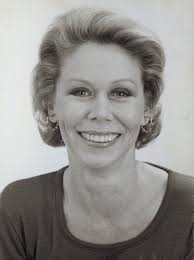
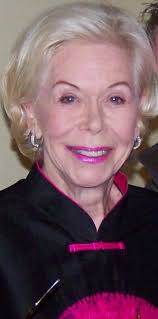
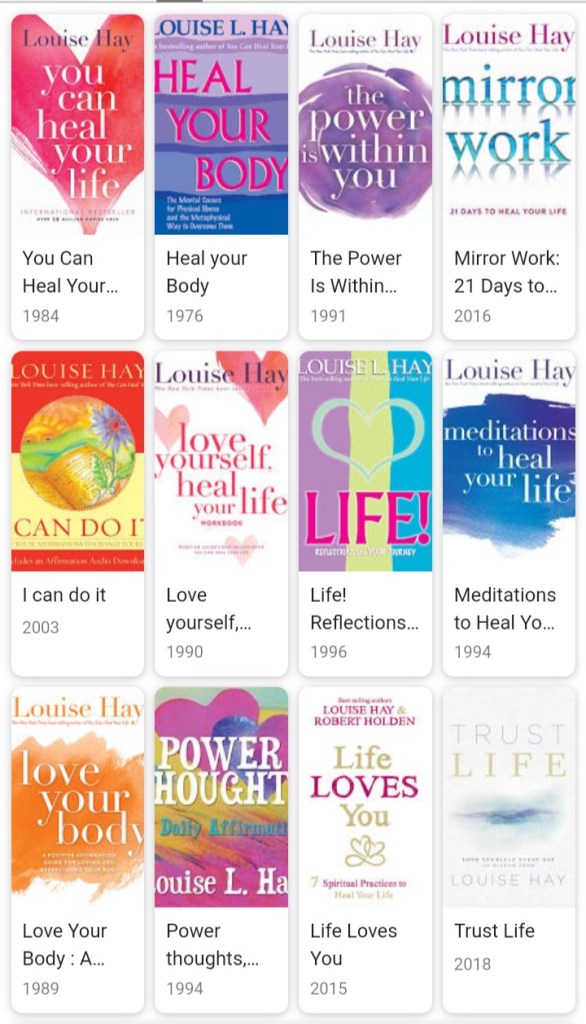
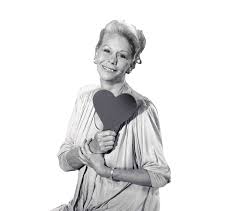
Louise Lynn Hay (October 8, 1926 – August 30, 2017) was an American motivational author and the founder of Hay House. She authored several New Thought self-help books, including the 1984 book, You Can Heal Your Life. Hay recounted her life story in an interview with Mark Oppenheimer of The New York Times in May 2008. In it, Hay stated that she was born in Los Angeles to a poor mother who remarried Louise’s violent stepfather Ernest Carl Wanzenreid (1903–1992), who physically abused her and her mother. When she was about 5, she was raped by a neighbor. At 15, she dropped out of University High School in Los Angeles without a diploma, became pregnant and, on her 16th birthday, gave up her newborn baby girl for adoption. She then moved to Chicago, where she worked in low-paying jobs. In 1950, she moved on again, to New York. At this point she changed her first name, and began a career as a fashion model. She achieved success, working for Bill Blass, Oleg Cassini, and Pauline Trigère. In 1954, she married the English businessman Andrew Hay (1928–2001); after 14 years of marriage, she felt devastated when he left her for another woman, Sharman Douglas (1928–1996).
Hay said that about this time she found the First Church of Religious Science on 48th Street, which taught her the transformative power of thought. Hay revealed that here she studied the New Thought works of authors like Florence Scovel Shinn, who claimed that positive thinking could change people’s material circumstances, and the Religious Science founder Ernest Holmes, who taught that positive thinking could heal the body.
By Hay’s account, in the early 1970s she became a Religious Science practitioner. In this role she led people in spoken affirmations, which she believes would cure their illnesses, and became popular as a workshop leader. She also recalled how she had studied Transcendental Meditation with the Maharishi Mahesh Yogi at the Maharishi International University in Fairfield, Iowa.
Hay described how in 1977 or 1978 she was diagnosed with “incurable” cervical cancer, and how she came to the conclusion that by holding on to her resentment for her childhood abuse and rape she had contributed to its onset. She reported how she had refused conventional medical treatment, and began a regime of forgiveness, coupled with therapy, nutrition, reflexology, and occasional colonic enemas. She claimed in the interview that she rid herself of the cancer by this method, but, while swearing to its truth, admitted that she had outlived every doctor who could confirm this story. In 1976, Hay wrote her first book, Heal Your Body, which began as a small pamphlet containing a list of different bodily ailments and their “probable” metaphysical causes. This pamphlet was later enlarged and extended into her book You Can Heal Your Life, published in 1984.
In February 2008, it was second on the New York Times miscellaneous paperback bestsellers list. Hay wrote, on page 225 of her book (December 2008 printing), that it has “… sold more than thirty five million copies”. It was announced in 2011 that You Can Heal your Life had reached 40 million sales.
Louise Hay died in her sleep on the morning of August 30, 2017 at age 90.

 Oneself Believers